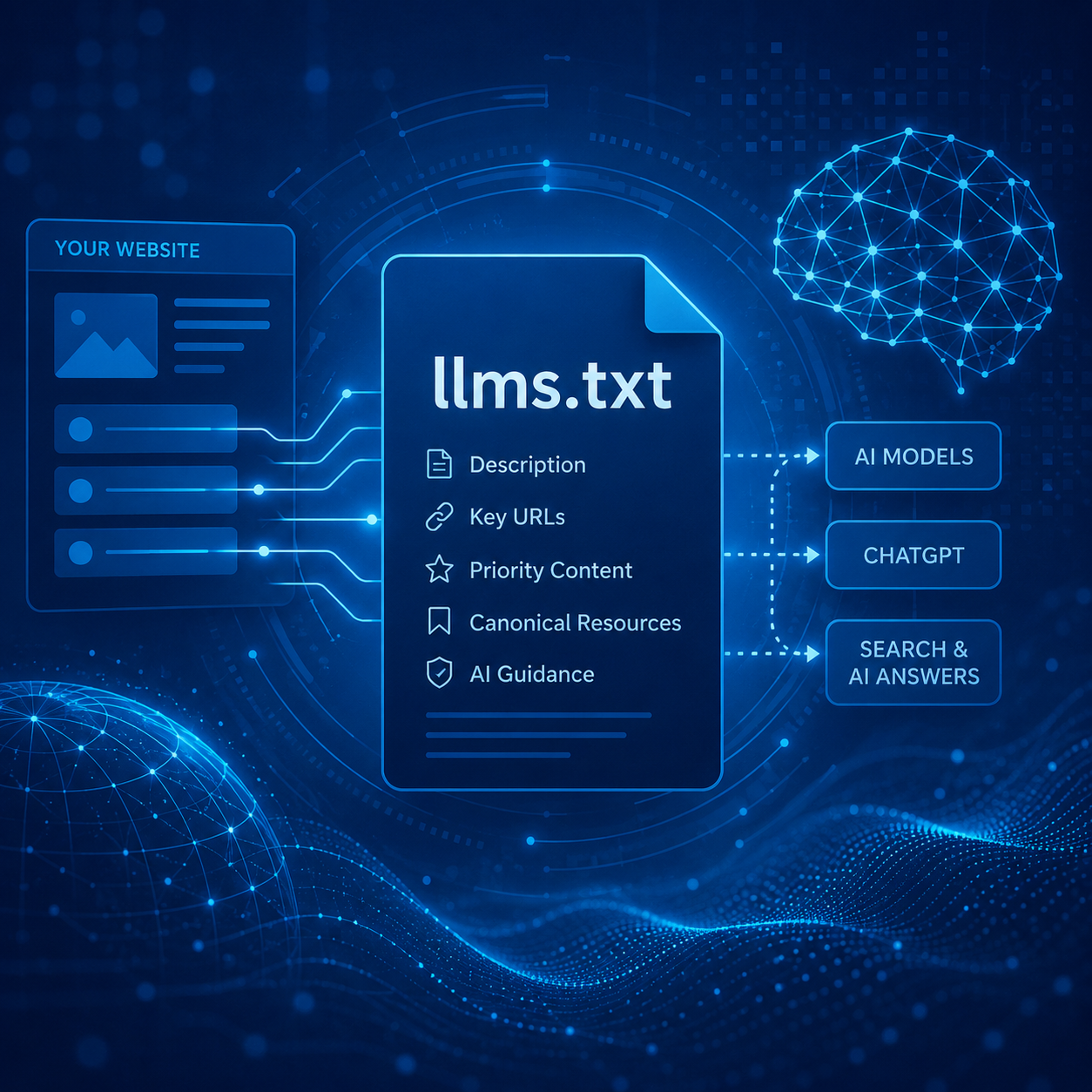
An llms.txt file might sound niche today, but it’s quickly becoming a critical part of modern SEO and GEO strategy. As AI-driven search tools like OpenAI ChatGPT, Google Gemini, and other large language models increasingly shape how users discover information, websites need clearer ways to communicate with these systems.
Think of llms.txt as a guidebook for AI. It helps language models understand which parts of your site matter most, which content is authoritative, and how your information should be interpreted. While traditional SEO focused on search engine crawlers, GEO (Generative Engine Optimization) is about influencing how AI systems summarize, cite, and recommend your brand.
A strong llms.txt file typically includes:
Your preferred site description and expertise areas Key URLs and priority content sections Citation preferences and canonical resources Guidance on structured content or documentation Instructions that reduce AI confusion or hallucination risks
The goal isn’t just visibility — it’s accuracy. Without clear signals, AI tools may misunderstand your content, overlook valuable pages, or fail to associate your brand with the topics you want to own.
Implementation itself is relatively simple, but strategy is where most businesses fall short. The real challenge is deciding what AI systems should prioritize and how that aligns with your broader SEO, content, and authority-building efforts.
That’s why forward-thinking brands are beginning to audit their sites specifically for AI discoverability, not just search rankings. An llms.txt file is no longer a “future-proofing” exercise — it’s becoming part of building a resilient online presence in the AI era.
If you’re unsure whether your website is truly optimized for AI-driven discovery, a professional GEO audit can reveal gaps traditional SEO tools often miss.